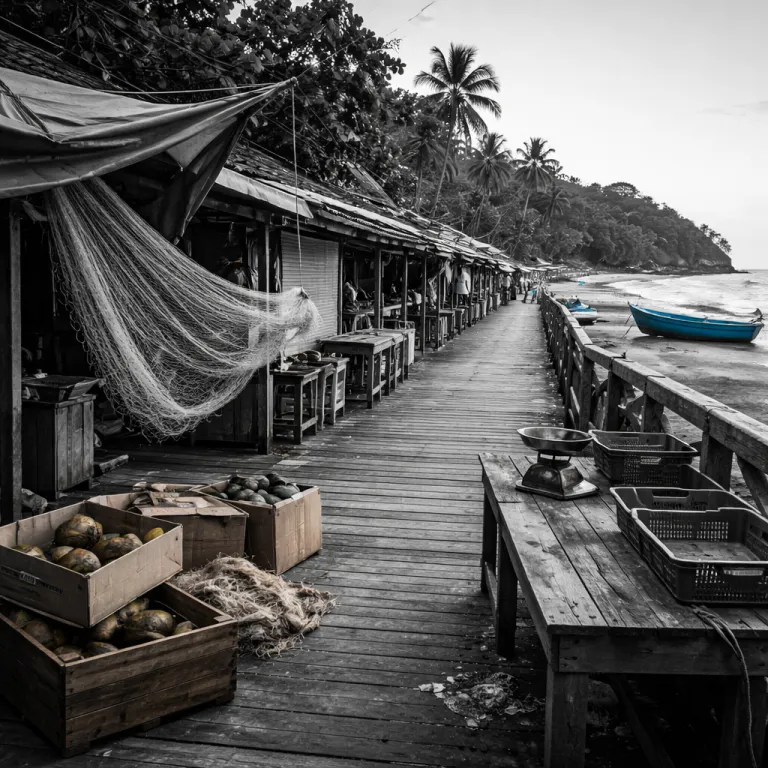
Rethinking the idea of a honeymoon resort in Tobago
Most couples arrive in Tobago expecting a classic Caribbean honeymoon resort template. They imagine one wristband, one beach, one bar and a single buffet that promises everything yet reveals very little about the island. That model might work elsewhere in the Caribbean, but it flattens a Tobago honeymoon into something generic and forgettable.
On these twin islands, the all inclusive frame does more than limit your restaurant choices; it can blur the very reasons Trinidad and Tobago feel different from their neighbours. Visitor surveys and tourism reports from the Tourism Development Company and the Ministry of Tourism consistently note that travellers weigh all inclusive resorts against more open ended stays and often conclude that “limited options, cultural experiences preferred.” A honeymoon here should be about the island’s natural beauty, its reef protected bays, its Caribbean kitchen and the way couples move between a quiet beach resort and a lively street food stand in a single afternoon.
Think of a honeymoon resort in Tobago less as a sealed compound and more as a refined base camp. Your hotel or villa becomes the house you return to after a day at Pigeon Point or a late swim at Bacolet Beach, not the only place you are allowed to eat or explore. This guide treats Tobago, and by extension Trinidad, as a living honeymoon destination rather than a product on a shelf, and shows how to build a stay that keeps the islands at the centre of your story.
How the all inclusive frame erases the island
When you buy a fully packaged honeymoon resort experience, you are paying to reduce friction. You trade the small uncertainties of choosing a car rental, arranging airport transfers or booking a reef trip for the comfort of a coloured wristband. On an island like Tobago, that trade off is expensive in ways that are not only financial.
All inclusive resorts tend to compress the Caribbean into a single, familiar script: the same cocktails, the same playlists, the same buffet labels. In Tobago, where Castara fishing boats still pull up on the sand at sunrise and the Nylon Pool shifts colour with the sun, that script feels off key. The best honeymoons here lean into the island’s rhythm instead of hiding from it behind a gate.
Couples who stay in independent hotels, villas or small scale beach resort properties usually end up with a richer story. They eat at a Caribbean kitchen in Black Rock one night, then share grilled fish at a simple house turned restaurant in Castara the next. That movement across the island turns a standard Tobago honeymoon into something that feels personal and deeply rooted, with memories tied to specific bays, people and meals rather than to a single buffet line.
Why Trinidad and Tobago punish the default package
Trinidad and Tobago are not built around the resort economy in the way some Caribbean islands are. Port of Spain is a working capital first and a tourism hub second, and Tobago’s villages still feel like communities that happen to host visitors rather than stage sets. When couples arrive with a Sandals shaped expectation of a honeymoon destination, the mismatch can be jarring.
The stalled Sandals Tobago project, widely reported in local media and parliamentary statements, underlines this structural reality: the islands resist being reduced to a single brand narrative. There are only a handful of all inclusive style properties, and even the popular ones such as Magdalena Grand at Tobago Plantations or Starfish Tobago operate within a wider local ecosystem of restaurants, taxis and tours. You can book a room at a large resort, but the island will still insist that you step outside for the best experiences.
For honeymooners, that means the value proposition of an all inclusive package is weaker than it appears. You might pay for unlimited meals and drinks, yet the top dinners of your trip will probably happen at independent places like The Fish Pot or La Tartaruga, or at a Caribbean kitchen overlooking a quiet bay. The more you leave the property, the more you realise that the resort was never the main event, just one element in a wider Trinidad and Tobago honeymoon landscape.
From wristband to island: a villa plus restaurant honeymoon guide
The alternative to an all inclusive honeymoon resort in Tobago is not chaos. It is a curated mix of villa, independent hotel and restaurant experiences that respects both your time and the island’s character. Think of this as a guide for couples who want the best of Tobago without surrendering their trip to a package.
On the island’s Caribbean coast, Castara Retreats has become a quiet favourite for couples who value view, privacy and access to the sea. The property steps down a forested hillside above Castara’s main beach, with wooden houses and apartments angled towards the reef and the setting sun. You wake to birdsong, walk down to the sand, then decide whether this Tobago honeymoon day will be about the beach, a boat trip or a drive to another bay.
Staying at Castara Retreats or similar villas near Englishman’s Bay changes how you relate to the island. Instead of a single resort restaurant, you have a shortlist of Caribbean kitchen options in the village, from simple roti shops to small places serving grilled mar and lobster. Couples often say they fall in love with Tobago not from a grand beach view, but from evenings spent in a modest beach house bar where the owner remembers their names and asks about their day on the water.
Building your own “soft inclusive” stay
A villa plus restaurant model does not mean doing everything yourself. Many properties, from Bacolet Beach Club to the villas at Stonehaven, can arrange airport transfers, car rental and even a private guide for day trips. You still enjoy the ease that honeymooners crave, but you keep the freedom to choose where and how you spend each day.
One evening you might book a table at a fine dining restaurant in Tobago, the next you might eat at a roadside stand recommended by your taxi driver. On a different trip, you could fly to Trinidad for a night or two in Port of Spain, using an honest cultural itinerary to frame your urban stay, such as the one outlined in this Trinidad cultural itinerary. That contrast between island quiet and city energy is something an all inclusive resort cannot replicate.
For couples used to the predictability of a large resort, this approach can feel like a risk. In practice, it often leads to better service and more attentive hospitality, because owners and staff are not working to a volume driven model. They know that honeymoon guests will remember the details, from the first sunset at Pigeon Point Beach to the last swim in the Nylon Pool’s clear water.
How much this actually costs
When you strip away the marketing, the cost of a Tobago honeymoon built around independent stays is usually comparable to a mid range all inclusive package. A villa or small hotel near a beautiful beach might look more expensive per night, but you are not paying for unlimited drinks you will never order. Instead, you allocate that budget to dinners at places like The Fish Pot, La Tartaruga or a beach club with a strong Caribbean kitchen.
To make the comparison clearer, consider a typical seven night stay for two in Tobago during high season. A mid range all inclusive resort might run to a combined nightly rate that includes food and basic drinks, while a villa or boutique hotel near the coast will show a lower room rate but leave meals and activities separate. Once you add realistic restaurant spending and a few excursions, the totals often sit within the same band, with the independent model delivering more varied experiences for similar money.
For many couples, the real value lies in how this model changes their memories. Instead of recalling a single pool and a single bar, they remember a sequence of top moments across the island: a late swim at Bacolet Beach, a morning snorkel over a reef near Castara, a lazy afternoon at a beach club with blue waters and a long view of the sun sliding down. That is what a honeymoon destination should give you.
Where resorts still matter: Magdalena Grand, golf and the comfort factor
None of this means that large resorts have no place in a Tobago honeymoon. Properties such as Magdalena Grand at Tobago Plantations offer a scale and range of facilities that some couples genuinely want. The key is to treat the resort as one chapter in your trip, not the entire story.
Magdalena Grand sits on a long stretch of Atlantic facing coast, with a golf resort layout that wraps around lagoons and fairways. The beach here is more about view and breeze than calm swimming, but the beach golf combination appeals to couples who like to mix sport with downtime. You can spend a morning on the course, then drive to a calmer beach resort on the Caribbean side for an afternoon in blue waters.
For travellers who enjoy structured days, a resort like this can be a reassuring base. You have multiple pools, several restaurants and a clear sense of what each day will look like, which can be helpful at the start of a honeymoon when you are still decompressing from wedding logistics. Once you have settled, the island will start calling you beyond the gates.
Pairing a resort stay with independent nights
One effective strategy is to book a few nights at Magdalena Grand or another full service hotel, then shift to a smaller property. You might start with four nights at the golf resort, then move to Castara Retreats or a villa near Bacolet Beach for the second half of your Tobago honeymoon. That way, you enjoy both the convenience of a resort and the intimacy of a house style stay.
Couples who follow this pattern often say the contrast heightens their appreciation of both experiences. The resort phase gives them time to rest, swim and adjust to the Caribbean sun without thinking about logistics. The villa phase then opens up the island, from Pigeon Point Beach to the Nylon Pool and the reef systems offshore.
If you are considering a similar split in Trinidad, a four star property in Port of Spain can play the same role. An honest assessment of what four star actually buys you in the capital, such as the one in this review of a Port of Spain hotel, helps set expectations. From there, you can decide how many nights to allocate to city energy versus Tobago’s quieter beaches.
When an all inclusive style stay makes sense
There are scenarios where a more inclusive resort model is the right call. If one partner has limited mobility, or if this is a second time honeymoon where the goal is pure rest rather than exploration, the predictability of a resort can be a gift. In those cases, the question is not whether to stay at a resort, but how to keep the island present in your days.
That might mean planning a couple of guided excursions to Pigeon Point, the Nylon Pool or a nearby reef, even if you are based at a large hotel. It could also involve booking dinners at independent restaurants on a few nights, so you still taste the island’s Caribbean kitchen beyond the buffet. The aim is to avoid letting the resort become a bubble that seals you off from Tobago’s natural beauty and culture.
For repeat visitors, a resort stay can function as a familiar house by the sea. You already know the island, you have your favourite beach club and your preferred car rental company, and you use the resort mainly as a comfortable base. In that context, the all inclusive frame is less of a trap and more of a tool.
Transit, taxis and the real honeymoon math
One of the quiet reasons couples default to an all inclusive honeymoon resort in Tobago is fear of logistics. They worry that arranging airport transfers, taxis and car rental will eat into their limited time together. On these islands, that fear is understandable but often overstated.
Most premium hotels, villas and beach resort properties in Tobago now offer pre booked airport transfers as a standard service. You step off the plane, clear the small terminal and find a driver holding your name, just as you would at a large resort. The difference is that this driver is usually a local operator who can also become your informal guide for the rest of your stay.
Car rental is equally straightforward, especially if you arrange it through your hotel or villa host. Many couples choose a hybrid model: they rely on taxis for the first few days, then rent a car for targeted exploration once they feel oriented. That pattern keeps stress low while still giving you the freedom to chase the best beach, the quietest reef or the top sunset view on any given day.
Why movement makes the honeymoon
Staying mobile changes how you experience Tobago as a honeymoon destination. Instead of seeing only the stretch of sand in front of your resort, you can move between Pigeon Point Beach, Bacolet Beach, Castara and smaller coves that rarely appear in brochures. Each beach has its own character, from the lively beach club energy at Pigeon Point to the slower, village feel of Castara.
That movement also exposes you to the island’s Caribbean kitchen in its natural habitat. You might stop at a roadside stand for bake and shark after a morning at a grand beach, then sit down for a more formal dinner at a restaurant overlooking blue waters in the evening. Over a week, those choices build a layered sense of place that no single resort restaurant can match.
In Trinidad, the same principle applies, especially in Port of Spain where taxis and ride share style services are widely used. A well chosen four star hotel becomes your house in the city, while you use local drivers to reach steelpan yards, doubles vendors and late night bars. For couples who want a deeper connection to the islands, this is where the real honeymoon value lies.
Using expert insight to plan with confidence
The Tourism Development Company of Trinidad and Tobago, the Ministry of Tourism and local tour operators regularly publish research on what visitors actually want from these islands. Their findings point to a clear rise in eco tourism, cultural immersion and adventure activities, especially among couples, which aligns with what we see on the ground when honeymooners choose independent stays over sealed resorts.
For a structured approach to planning, resources from tourism authorities, local businesses and cultural organisations can provide up to date information on events, festivals and new experiences. If you prefer a more curated path, platforms like mytrinidadstay.com offer a refined guide to booking luxury hotels near you in Trinidad and Tobago, including a detailed guide to booking premium stays. Used together, these tools let you design a Tobago honeymoon that feels both effortless and authentic.
As you weigh your options, remember that a honeymoon is not a product category; it is a sequence of days and nights in a specific place. Trinidad and Tobago reward couples who treat the islands as partners in that story rather than as backdrops to a pre packaged resort script. The right mix of hotel, villa, movement and meals will always beat the illusion of simplicity offered by a single wristband.
Key figures that shape honeymoon choices in Trinidad and Tobago
- Recent accommodation listings on major travel platforms show only a small cluster of all inclusive style resorts operating across Trinidad and Tobago, especially when compared with more resort driven Caribbean islands.
- Tourism Development Company and Ministry of Tourism summaries indicate that a clear majority of visitors to Trinidad and Tobago say they prefer cultural experiences over purely resort based stays, a trend that strongly supports villa plus restaurant honeymoon models.
- Stakeholder interviews conducted with tourism authorities, local businesses and cultural organisations highlight a sustained rise in eco tourism, cultural immersion and adventure tourism, trends that align closely with independent honeymoon travel.
- Market research using data analytics and visitor satisfaction surveys suggests that diversified tourism offerings lead to higher overall ratings, especially among couples seeking a Tobago honeymoon that balances beach time with authentic local encounters.
References
- Tourism Development Company of Trinidad and Tobago – visitor preference and product development reports, including summaries on accommodation choices and cultural tourism demand
- Ministry of Tourism, Trinidad and Tobago – policy documents and tourism statistics outlining visitor arrivals, spending patterns and interest in eco tourism and cultural immersion
- Tripadvisor – accommodation and resort data for Trinidad and Tobago, accessed via public listings and traveller reviews to compare all inclusive resorts with independent stays