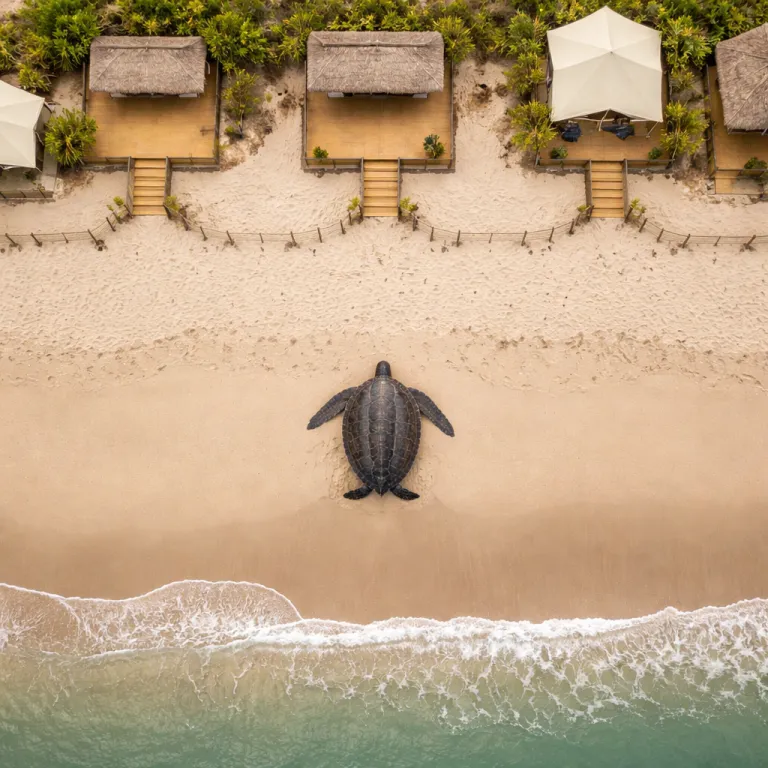
Leatherback turtles in Trinidad as a luxury trip anchor
On Trinidad’s north coast, leatherback turtles transform a quiet fishing village into one of the Caribbean’s most compelling wildlife stages. During the nesting season, when this endangered species hauls itself from the open ocean to the sand, the experience can feel either reverent or uncomfortably commercial depending on where you stay. For travelers using mytrinidadstay.com to book premium hotels, the question is simple yet demanding: which properties treat the leatherback turtle as a neighbour rather than a prop. This article is an independent editorial guide; mytrinidadstay.com may list or partner with some of the accommodations mentioned, but no property has paid to influence the recommendations here.
Trinidad is one of the world’s major nesting areas for the leatherback sea turtle, with Grande Riviere and Matura among the most important stretches of coast. According to the Wider Caribbean Sea Turtle Conservation Network (WIDECAST), Trinidad’s beaches host thousands of nesting leatherbacks each year, making them some of the densest rookeries in the region (WIDECAST country updates, 2019–2023). From March to August, sea turtles and especially leatherbacks arrive at night to lay eggs in the damp sand, turning the dark beach into a living classroom for marine conservation. For luxury travelers, this nesting season is the rare moment when a five star stay and serious turtle conservation efforts can align rather than clash.
Any trip built around leatherback turtles in Trinidad should start with timing, because the nesting window shapes everything from room rates to permit availability. Local conservation groups such as Nature Seekers and Grande Riviere Nature Tour Guides describe the calendar clearly: “March to August” is the broad nesting season, with “April to May during peak nesting season.” Those peak months are when nesting turtles are most frequent on the beach, when guided sea turtle walks are tightly managed, and when the best rooms at the small hotels near the habitat are booked out weeks in advance. Nature Seekers summarises it bluntly in its 2023 visitor briefing: “If you want to be almost sure of seeing a leatherback, aim for April or May and book early.”
Booking the nesting window at Grande Riviere’s on beach hotels
Grande Riviere is the north coast village where leatherback nesting and hotel choice intersect most sharply. Two long established properties sit directly on the nesting beach, giving guests front row access to turtles nesting while also demanding strict respect for conservation rules. If you care about how leatherback turtles in Trinidad are treated, these are the hotels you scrutinise first, and both work under the same Forestry Division permit framework that governs all official turtle watching.
Le Grand Almandier occupies a low rise footprint at the eastern end of the beach, with balconies angled toward the sea but lighting kept low to protect the habitat. The hotel is listed by local tourism bodies and is known among turtle tour operators for its cooperation with conservation rules. During nesting season, staff coordinate closely with the local turtle conservation program so that guests only access the sand with certified guides and the correct permit. To reserve, you typically email or call the property directly, then ask them to link your booking to that night’s authorised turtle tour so your permit is secured in advance. The atmosphere is relaxed rather than ostentatious, and the luxury here is proximity to marine life rather than marble lobbies or a resort wristband.
Mt Plaisir Estate sits almost mid arc on the same stretch of coast, so nesting turtles can pass within metres of the restaurant deck at high tide. The property has hosted visiting researchers and documentary crews, and its operations are widely referenced in community based turtle tourism reports. Rooms are simple but spacious, and the real premium is being able to step from bed to beach in seconds while still following conservation efforts that keep lights dim and noise low. When enquiring, ask the hotel to confirm which local guide group they are working with that season and whether your stay includes a guided turtle night or if it must be booked separately. For travelers comparing this to large scale Caribbean developments such as the planned Kilgwyn Bay expansion in Tobago, which we unpack in detail in our analysis of how mega resorts reshape luxury expectations, Grande Riviere offers the opposite model: small scale, turtle listed habitats and community led marine programs.
HADCO Experiences and the ethics of guided turtle nights
HADCO Experiences positions itself as the eco lodge option for travelers who want leatherback turtles in Trinidad framed through science, not spectacle. Its properties on the north and east coasts work hand in hand with local NGOs and government agencies, embedding guests into structured conservation efforts rather than casual beach wandering. The company’s Turtle Watching Experience at Grande Riviere, for example, is operated in partnership with the Grande Riviere Nature Tour Guides Association under permits issued by Trinidad and Tobago’s Forestry Division. For transparency, HADCO Experiences is a commercial operator; inclusion here is based on its documented collaboration with community groups rather than any paid placement. For a solo explorer, this means your night on the sand is curated with the same care as a tasting menu in Port of Spain.
Guided turtle nights here are never a free for all; they are a program of beach monitoring, night patrols and educational talks that explain why the leatherback sea turtle is globally endangered. The International Union for Conservation of Nature (IUCN) lists the leatherback as “Vulnerable” worldwide, with some subpopulations considered “Critically Endangered,” according to the IUCN Red List assessment updated in 2013 and reviewed in subsequent regional reports. Guests learn how nesting beaches in Trinidad compare to other strongholds such as Costa Rica, and why this species spends most of its life in the open ocean feeding on jellyfish. As one Grande Riviere guide explained in a 2022 community workshop, “Our job is to make sure the turtle never even knows you were here.” The guides repeat the core rules without apology: “Book guided tours in advance”, “Wear dark clothing at night”, “Avoid flash photography”, “Respect local guidelines”, “Support conservation efforts.”
Ethical luxury in this context is about restraint, so HADCO Experiences keeps group sizes small and insists that visitors stay behind the turtle’s shoulder line while it begins to lay eggs. Typical groups range from about 6 to 12 people per guide, depending on the beach and permit conditions, which keeps noise and movement under control. Once the leatherback turtle enters its nesting trance, guests may approach a little closer under the ranger’s direction, but the emphasis remains on the animal rather than the photo. If you are used to spa centric retreats, think of this as a different kind of wellness stay, one that complements Tobago’s barefoot properties we profile in our guide to wellness focused barefoot luxury in Tobago, but rooted instead in marine life and night air.
Why the Port of Spain day trip falls short for serious turtle watchers
Many visitors first hear about leatherback turtles in Trinidad as a late night excursion sold from Port of Spain hotels. On paper, the idea sounds efficient: leave the city after dinner, drive to the north coast, watch sea turtles, then return before dawn. In practice, this day trip model often shortchanges both the traveler and the nesting turtles, and local guides increasingly encourage visitors to stay at least one night near the rookeries instead.
The drive from Port of Spain to Grande Riviere or Matura can take several hours each way along winding coast roads, which compresses your time on the nesting beach into a narrow window. In normal traffic, Port of Spain to Matura is roughly 1.5 to 2 hours by car, while the journey to Grande Riviere can stretch to 2.5 or even 3 hours. If the leatherbacks are late emerging from the sea, or if conservation staff temporarily close a section of habitat to protect a sensitive nesting turtle, your only encounter may be distant silhouettes. You also miss the quieter moments at dawn when hatchlings sometimes emerge, and when local nature seekers and guides debrief the night’s conservation efforts over coffee.
Staying overnight in a hotel near the nesting beaches changes the rhythm completely, giving you multiple chances to see nesting turtles and to understand the full life cycle from eggs to hatchlings. A practical pattern is to leave Port of Spain by mid afternoon, check into your north coast hotel before sunset, join the authorised night tour between roughly 8 p.m. and 1 a.m., then sleep in and return to the city late the next morning. It also allows you to support community based turtle conservation through your room rate, meals and guide fees rather than treating the coast as a quick wildlife stop. For travelers building a longer itinerary across both islands, pairing a north coast stay with a few nights in a private villa or spa retreat, as outlined in our guide to elegant private villa rentals in Trinidad and Tobago, creates a more balanced luxury experience.
How to be a respectful guest on Trinidad’s nesting beaches
Watching leatherback turtles in Trinidad is a privilege that comes with clear responsibilities, especially on sensitive nesting beaches like Grande Riviere, Matura and Fishing Pond. Conservation guides expect guests to follow instructions precisely, because even a single bright phone screen can disorient a sea turtle emerging from the ocean. Luxury here is measured by how lightly you tread on the sand, not by how close you stand to the animal.
Before you step onto the beach, you will usually check in with a local conservation group that manages permits and group sizes for the night. In recent seasons, standard permit and tour fees for non residents have typically ranged from about US$15 to US$30 per person, depending on the organisation and whether transport is included; these figures are drawn from 2022–2023 price lists published by Nature Seekers, Grande Riviere Nature Tour Guides and similar NGOs, but you should always confirm current rates directly. To secure a spot, you either book online where available, call the NGO office or ask your hotel to reserve on your behalf, then receive a confirmation with your reporting time and meeting point. These teams, often supported by international partners, run educational programs that explain why the leatherback species is endangered and how community efforts have increased nesting numbers along Trinidad’s coast. They also outline the science: average carapace length for an adult leatherback is around 145 to 160 centimetres, according to field measurements compiled in WIDECAST technical reports and regional tagging projects up to 2020, nesting season lasts roughly six months, and peak nesting spans about two months when leatherbacks and other sea turtles are most active.
On the sand, you walk only where guides indicate, keep at least several metres behind any turtle listed as actively nesting, and never shine lights toward the sea or the dunes. You wait until the leatherback turtle begins to lay eggs before approaching, and you stay low and quiet so the animal’s focus remains on its instinctive task. Respecting these rules protects the habitat for future generations of nesting turtles and ensures that leatherback turtles in Trinidad remain a highlight for nature seekers rather than a cautionary tale of over tourism.
Planning a north coast itinerary around leatherback turtles
Building an itinerary around leatherback turtles in Trinidad means thinking beyond a single night on the nesting beach. The north and east coasts offer a chain of small communities, forested hills and wild beaches where marine life, river pools and local food create a fuller sense of place. A well planned route lets you experience leatherbacks at Grande Riviere, other sea turtles at Matura and Fishing Pond, and still have time for rum shops and waterfalls.
Start by securing accommodation at either Le Grand Almandier, Mt Plaisir Estate or a HADCO Experiences lodge during the core nesting season from March to August, with April and May as your best chance for frequent leatherback nesting. Then layer in guided walks through nearby forest reserves, visits to other stretches of coast where different sea turtle species may forage, and slow afternoons on non nesting beaches where swimming is safer. A simple two night outline might look like this: Day 1, depart Port of Spain after lunch, arrive at Grande Riviere by late afternoon, check in and join a night turtle tour; Day 2, sleep in, explore the village and river mouth, add a second guided patrol if available; Day 3, return to the city or continue along the coast toward Matura for another evening with a different conservation group. If you are tempted to compare this with Costa Rica, remember that Trinidad’s turtle conservation model is intensely community led, with local residents acting as both guardians and storytellers.
Throughout your stay, treat every interaction with the ocean as part of the same marine conservation narrative, from refusing single use plastics to choosing operators who support formal conservation efforts. Ask your guides how the program is funded, how many nesting turtles they recorded last season and what challenges they face in protecting eggs from predators and erosion. The more you engage with these details, the more your luxury trip becomes a partnership with the coast rather than a simple transaction for a leatherback sea spectacle.
FAQ
When is the best time to see leatherback turtles in Trinidad ?
According to local conservation data and WIDECAST summaries, “April to May during peak nesting season.” The broader nesting season runs from March to August, but those two months usually offer the highest density of nesting turtles on the main beaches. Booking your hotel and guided tour well in advance for this window gives you the best chance of multiple sightings, especially on weekends when both permits and rooms sell out quickly.
Are guided tours mandatory for turtle watching on Trinidad’s beaches ?
Local regulations and conservation groups state clearly: “Yes, to protect turtles and their habitats.” On officially managed nesting beaches, visitors are required to join authorised tours operated under permits from the Forestry Division. Guided tours ensure that visitors keep a safe distance, avoid disturbing nesting turtles and follow rules about lighting and group size. They also help coordinate permit systems so that the number of people on each nesting beach remains manageable.
What should I bring for a night tour to see nesting turtles ?
The expert guidance is straightforward: “Dark clothing, no flashlights, and a respectful attitude.” Many guides provide red filtered lights if needed, because white light can disorient a sea turtle coming from the sea or returning to the ocean. Comfortable shoes for walking on sand, a light jacket for the coastal breeze and a small reusable water bottle are also useful.
Which beaches in Trinidad are best for seeing leatherback nesting ?
Grande Riviere, Matura and Fishing Pond on the north and east coasts are the primary nesting beaches for leatherback turtles in Trinidad. Grande Riviere offers the rare combination of on beach hotels and intensive turtle conservation efforts, while Matura and Fishing Pond are more focused on guided night patrols. All three require visitors to join authorised programs and respect strict conservation rules.
How do my hotel choices affect turtle conservation on the north coast ?
Choosing hotels that coordinate with local conservation groups directly supports marine life protection and community livelihoods. Properties such as Le Grand Almandier, Mt Plaisir Estate and HADCO Experiences work within formal conservation programs, limit lighting on the beach and help manage guest behaviour during nesting season. Your room rate, dining spend and tour choices all feed into the broader conservation efforts that keep Trinidad’s nesting turtles returning year after year.